The AI Enablement Brief · Jun 25, 2026
Redefining Success
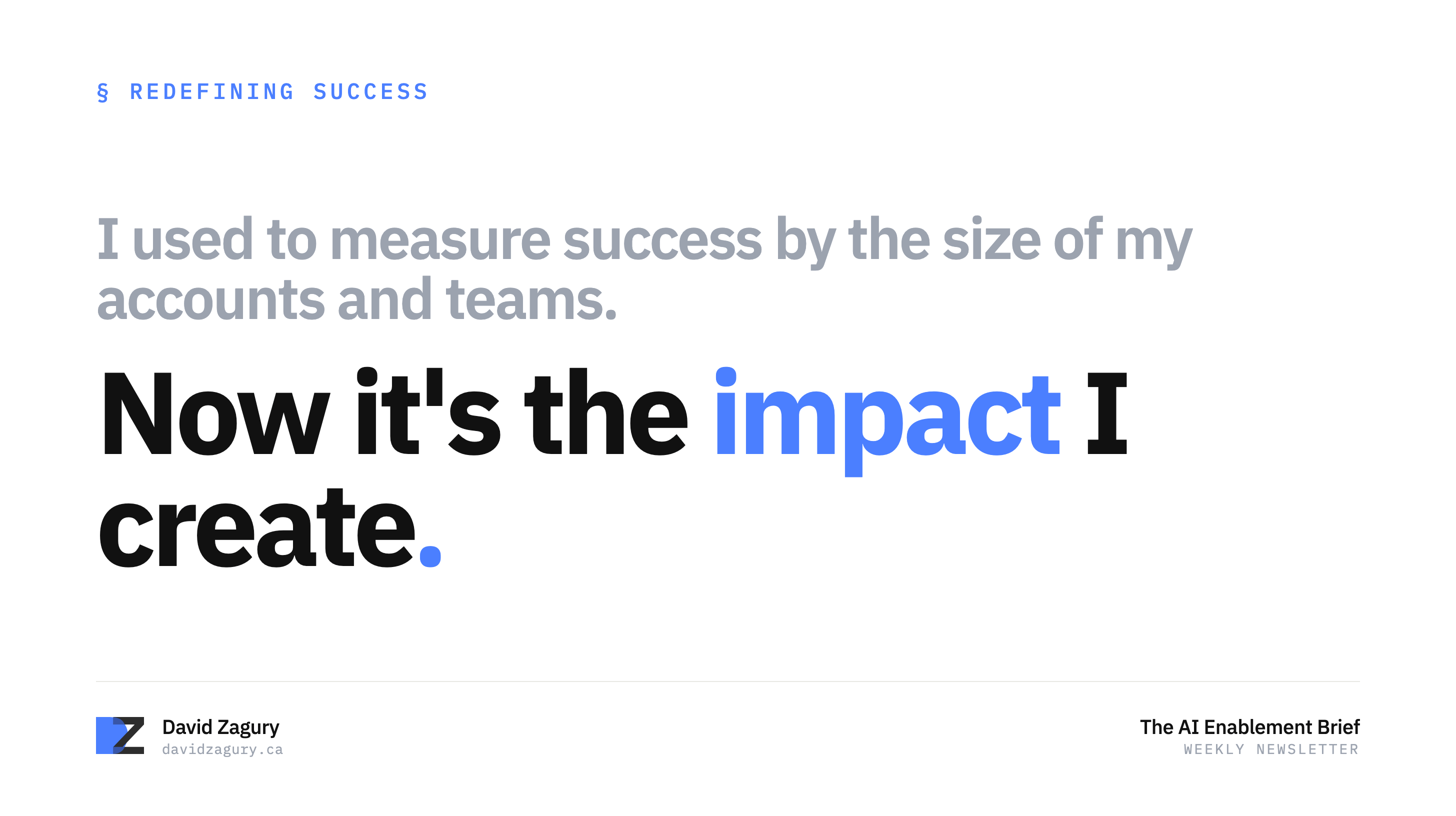
For years I measured my career by the size of my accounts and teams. Building with AI quietly changed the metric.
Something shifted in me this year.
For most of my career, I knew exactly what success looked like. It had a size. Bigger accounts. Bigger teams. Bigger budgets. The logic was simple, and for a long time it was true: the bigger the clients and the teams I led, the more opportunities that created, and the more success I got to enjoy.
I didn’t question it. In agency life, that’s the scoreboard you inherit. Headcount, billings, the size of the logo on the deck. You climb by managing more, and “more” slowly becomes the measure of how well you’re doing.
And then, quietly, the metric changed on me.
The Metric I Inherited
There’s nothing wrong with size. Big accounts are a privilege to work on, and leading a large team is genuinely rewarding. I’m not here to tell you that ambition is a trap or that titles don’t matter. They do.
But size is a borrowed metric. It’s the one the industry hands you, and it’s easy to spend a whole career chasing it without ever stopping to ask whether it’s the thing that actually lights you up.
For years, mine did. The growth felt like progress because, by that scoreboard, it was. So I kept climbing, and I never had a reason to look up.
The Shift
What changed was building.
Since I started building AI solutions for our clients and internal teams at NP Digital, I’ve seen firsthand the kind of value this work can unlock. Not in theory, in a slide. In the actual day-to-day of teams who were stuck, or slow, or buried under work that didn’t need a human on it.
I built mediaplan.ca to help marketing teams of all sizes move faster on the part of the job that usually eats their week. I’ve built custom solutions that either drive more revenue or quietly hand people back hours of their time.
And somewhere in there, I noticed something I didn’t expect: I was getting more satisfaction from a small tool that made a team’s work easier than I used to get from adding another big logo to the roster.
That caught me off guard. The enjoyment had moved.
Impact Over Size
Here’s the part I’m still sitting with.
For the first time, the size of the team or the account isn’t where the meaning is for me. The meaning is in the impact. Did this make someone’s job better? Did it save real time, or unlock real growth? Did it move something that mattered?
And what makes this moment different is that impact no longer requires size. You used to need a big team to create big leverage. Now one person who builds the right thing can change how an entire team works. The tools have quietly decoupled the impact from the headcount.
That’s a small shift in language and a big shift in how you spend your energy. And I don’t think it’s only happening to me. As more of us start building, the old scoreboard — title, team size, account size — starts to feel like it’s measuring the wrong thing.
What This Means
If any of this resonates, I’d offer one simple thing: pay attention to what actually energizes you right now, not what used to.
For me, the tell was obvious once I noticed it. I was more excited shipping a small tool that genuinely helped a team than I was managing something several times its size. That’s data. It’s worth listening to.
You don’t have to throw out ambition or pretend titles are meaningless. But it’s worth asking what your real metric is. If the work that lights you up has quietly changed, your definition of success probably has too, whether you’ve admitted it to yourself yet or not.
I’m deeply motivated by the impact I can create now. Not the title. Not the size of my teams or accounts.
Has your definition of success shifted too?