The AI Enablement Brief · Apr 17, 2026
The Reinvention Gap
Most people are adapting to AI. A smaller group is reinventing around it. The gap between them is growing fast.
One of the reasons I’m passionate about AI is that this technology is pushing us to reinvent ourselves.
Not just adapt. Actually reinvent.
The distinction matters more than it might seem. We tend to use both words interchangeably, as if using AI to do your current job faster is the same as reimagining what your job could be. It isn’t.
Just like electricity, the calculator, or the internet — this technology is enabling us to do more, better, and faster than ever before.
But the people who captured the real value from those shifts weren’t just the ones who adopted the technology.
They were the ones who reorganized their work around it.
The Adapters
Most people are already adapting — and that’s genuinely a good start. Using AI to write emails, asking it questions, treating it like a smarter, more context-aware search engine. Adoption matters.
But adaptation has a ceiling.
If you’re using AI to do the same work faster, you’ll eventually hit it. The people reinventing themselves are doing something different: they’re looking at their entire day and asking what can genuinely be outsourced to AI — and truly using it as a thinking partner, not just a shortcut.
When those things are outsourced, what’s left? That’s where reinvention starts.
The people who go through that exercise seriously will be dramatically further ahead in the next 12 months.
A Year That Changed My Day
From personal experience, my day-to-day looks completely different than it did a year ago at the same time.
I used to spend most of my day inside Excel or ad platforms — running analysis, working with teams to optimize campaigns, working closely with clients to deliver on their objectives. Important work, but largely execution-level.
Today, I spend about half of my day inside Claude — building solutions for our teams at NP Digital, running complex analysis and research for clients. That work still gets done. It just doesn’t consume my whole day anymore.
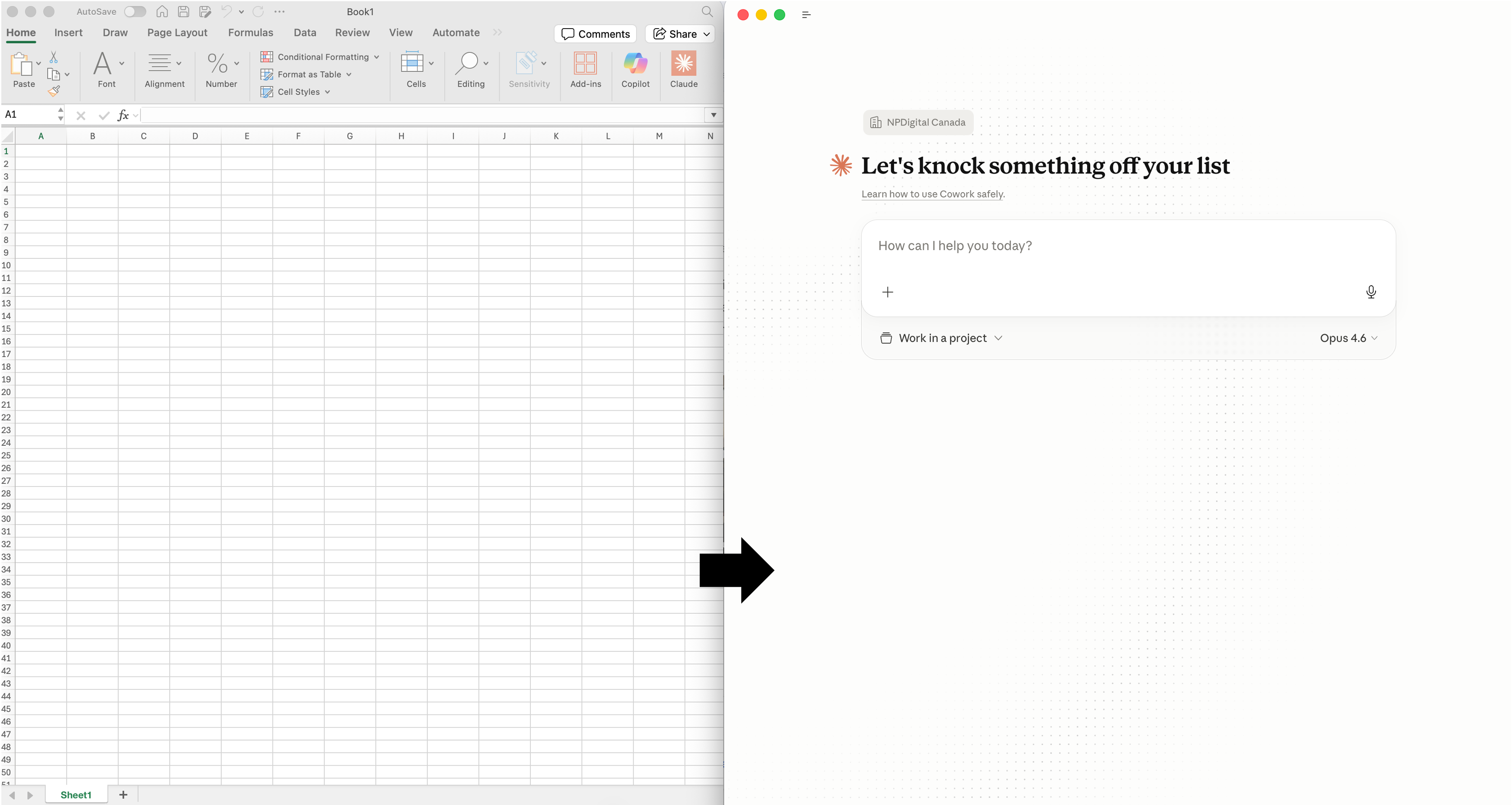
Here’s where it gets interesting: the other half of my day is now spent with the team and clients, collaborating closer than ever, and having real strategic conversations.
This is the part that was often overlooked in the past, because busywork got in the way. Almost all the time.
Today, Claude or any other LLM can handle most of that busywork, freeing up valuable time for you and your teams to do more of the work we should have been doing for years.
The Curiosity Variable
So what actually separates the people adapting from the ones reinventing themselves?
It’s not technology. It’s not a title or a role. Not time — everyone’s short on time. Not even compliance, as in top-down “we’re all using AI now” mandates.
It’s curiosity.
The teams pulling ahead today are the ones who are deeply curious — experimenting, testing, learning, documenting, and sharing what they find. They’re not waiting for a playbook. They’re writing it as they go.
And it’s incredibly hard to force that on an organization. It has to come from the people doing the work. Like with any technology — some people will fully embrace it, while others won’t. And that’s totally ok and normal.
But if you’re curious, the next step matters.
The Move That Compounds
If you’re working in an organization now and want to do more: become the AI expert.
This is currently the best way to future-proof your career and keep delivering value for your teams, your clients, and ultimately, for yourself as well. Not because AI expertise is a comfortable title to hold — but because it compounds.
Every experiment teaches you something. Every documented workflow makes the next one faster. Every conversation where you’re the person with real, hands-on answers builds credibility that outlasts any single role.
The curiosity is the start. The reinvention is what happens when you act on it consistently.
Are you adapting — or are you reinventing?