The AI Enablement Brief · Feb 18, 2026
The OpenClaw Trade-off: Why I’m Staying on the Sidelines
Agentic AI is moving from "answering" to "acting," but the cost of entry might be your digital soul.
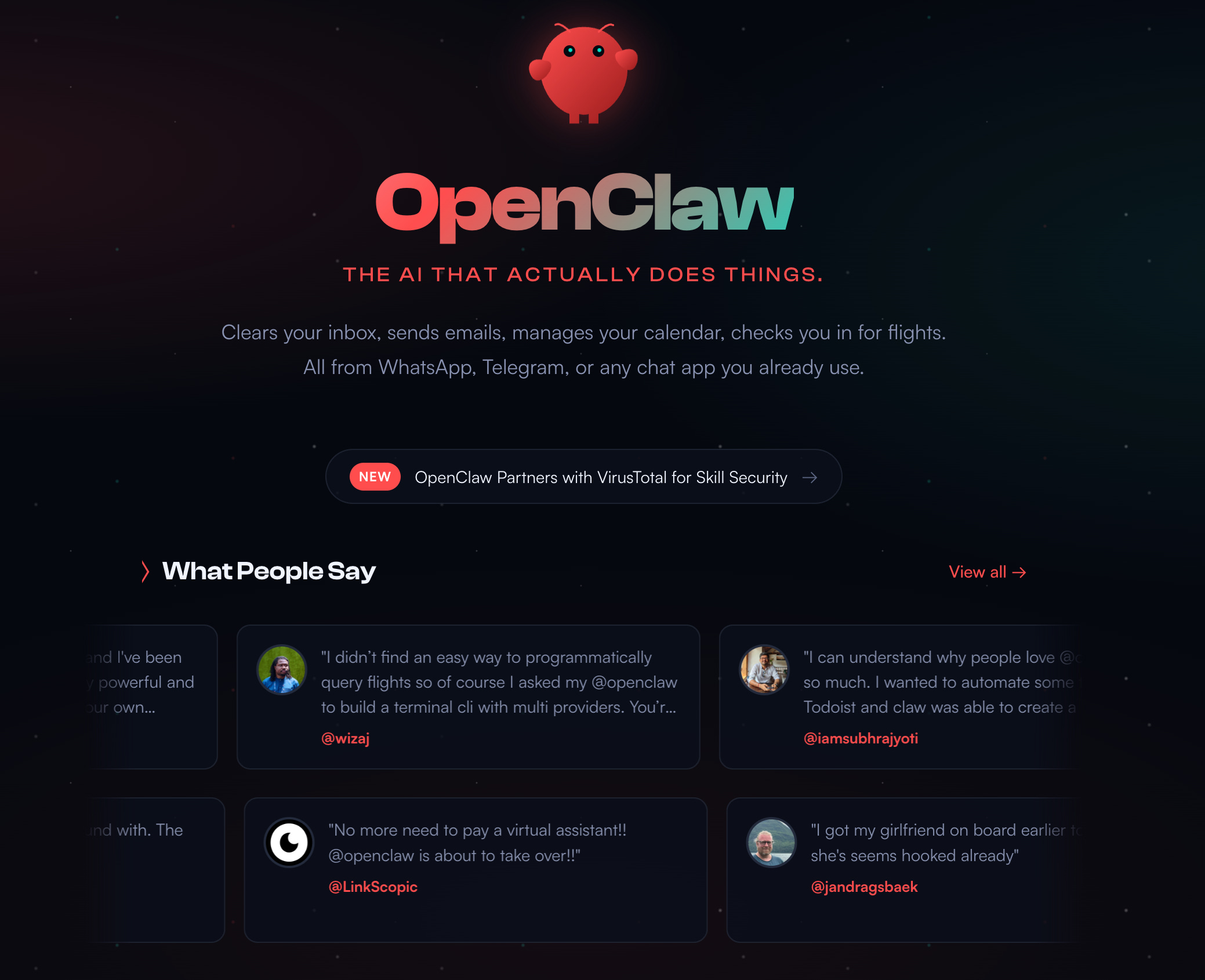
OpenClaw is arguably one of the biggest unlock in the history of agentic AI.
It represents a fundamental shift in the UI of our lives: moving from tools that answer questions to agents that take autonomous actions.
And it’s happening fast.
I’ve seen the use cases on X and YouTube. I’ve watched creators orchestrating entire multi-channel marketing teams from their basement with a single prompt. I’ve seen personal agents filling out complex government forms and checking into international flights while the user sleeps.
It sounds exciting. Futuristic. It feels like the “Genie in the Bottle” moment we were promised.
But for me, the trade-off isn’t worth it. Not yet, at least.
The Agentic Security Gap
While the efficiency gains of autonomous agents are undeniable, the current infrastructure lacks the protective “moat” required for professional or personal safety. We are currently building on quicksand.
The Identity Risk: When you build a personal agent, you are essentially creating a digital soul. This isn’t just a password; it’s a bundle of your API keys, your biometrics, and your behavioral footprint. Giving a bot the master keys to your identity is a level of exposure I’m not willing to take. If the agent can “act as you,” it can also “fail as you.”
The Malware Surge: The hackers are already ahead of the curve. Reports have surfaced of malware specifically engineered to hunt for OpenClaw configuration files. These files are the “crown jewels” of the agentic era. Once a bad actor has your config, they don’t just have your data—they have your agency.
The Loss of “Touch”: In marketing, and in life, there is value in the human touch. The subtle nuances of a brand’s voice or a strategic pivot often happen in the “gut feel” of a human operator. I’m not ready to let a bot make my high-stakes decisions for me—at least not for now.
The Market Landscape
The transition to true agentic AI is inevitable. The industry giants aren’t just watching; they are aggressively positioning themselves for the “Personal Agent” wars that will define the next decade:
OpenAI: Their strategy is clear. By acquiring the brain behind OpenClaw—Peter Steinberger—just three months after the project surfaced, they aren’t just buying code; they are buying the blueprint for OS-level autonomy. They want the agent to live inside the hardware.
Anthropic: I expect Claude to make massive leaps in true agentic work with Cowork. Their focus on “Constitutional AI” suggests they are trying to solve the safety problem before they hand over the keys to the kingdom.
Google: Gemini will likely be late to the party, as is the Google way. But when they arrive, they will leverage the most massive ecosystem integration on the planet. Your agent won’t just know your emails; it will know your calendar, your location history, and your documents in a way no one else can match.
The Safety-First Efficiency Model
To navigate this transition without compromising security, I am prioritizing Claude Cowork over unshielded, experimental agentic tools.
Workflow over Autonomy: My focus is on building real, productive, and valuable workflows that benefit teams by augmenting the human, rather than giving a bot total, unsupervised agency. We need “Human-in-the-loop” as a requirement, not a suggestion.
Controlled Integration: I am sticking to platforms with established, enterprise-grade security layers. Experimental open-source “unfiltered” access is a playground for hobbyists, but a liability for professionals.
The Core Mandate: Efficiency is the goal, but safety is the requirement. If the foundation isn’t secure, the speed of the build doesn’t matter.
The future is coming, and it’s coming quicker than we think. But until the infrastructure is safe and the “soul” of our work is protected, I’m staying on the sidelines of OpenClaw.
Are you ready to hand over the keys to your digital identity for the sake of a few saved hours?